







Workplace air quality often comes up when people notice changes in the premises or staff raise concerns about the air.
Observations alone do not always reveal what is causing a change. Measurements provide an objective picture of conditions in the workplace and help identify where further investigation would be useful.
The purpose is to gather evidence for decisions and put initial assumptions to the test.
Good measurements start with the right questions
A successful indoor air assessment begins before any equipment is set up.
Before planning measurements, ask:
- What have staff noticed in the workplace?
- Do their observations correspond to particular tasks or times?
- Are there any processes that could affect indoor air quality?
Staff observations alone cannot establish the cause of a change, but they can help target the measurements.
What can you measure in the workplace?
Plan measurements around how the premises are used and the work carried out there. Different sites need different measurements.
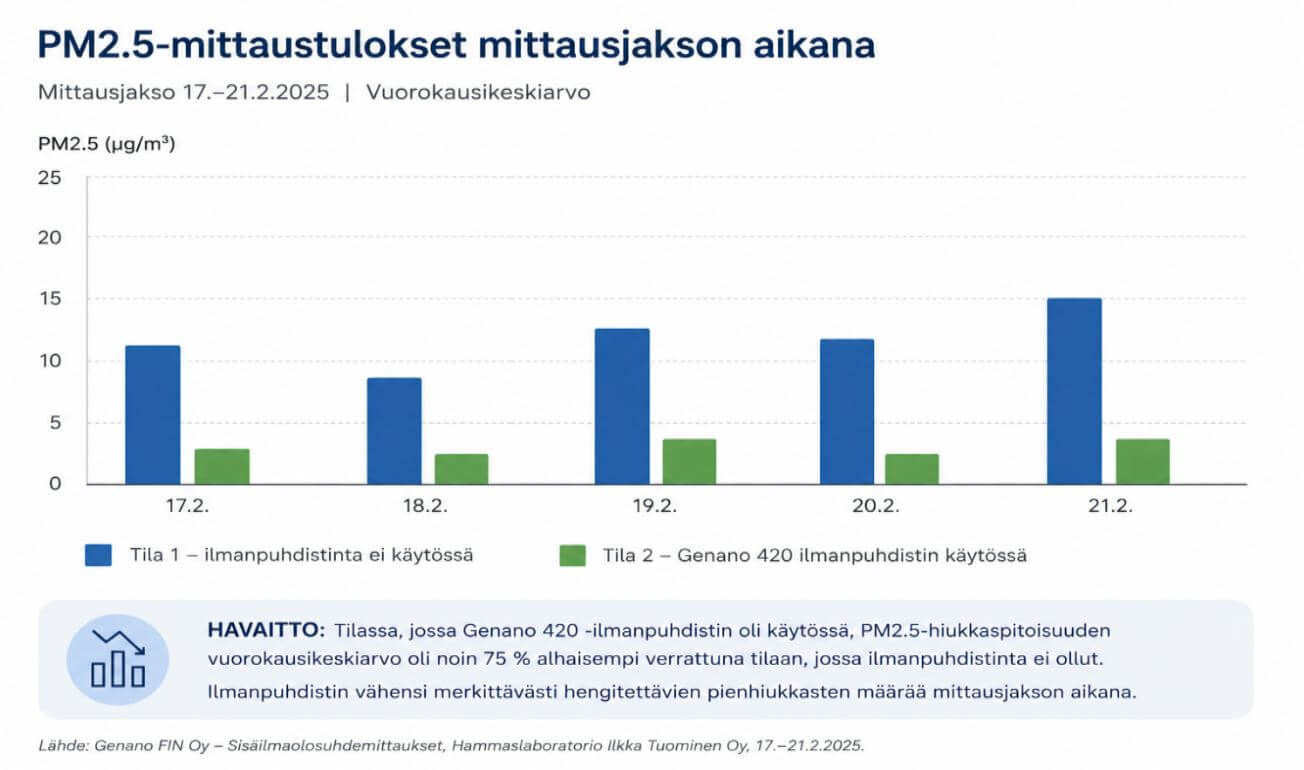
Particulate matter (PM1, PM2.5 and PM10)
Particle measurements show how much particulate matter is present and what size it is.
Particle size matters because smaller particles can travel deeper into the respiratory tract.
- PM10 covers the larger inhalable particles.
- PM2.5 covers fine particles that can travel deeper into the lungs.
- PM1 covers very small particles that can reach the air sacs in the lungs.
TVOC: total volatile organic compounds
TVOC measurements estimate the combined concentration of volatile organic compounds in the workplace.
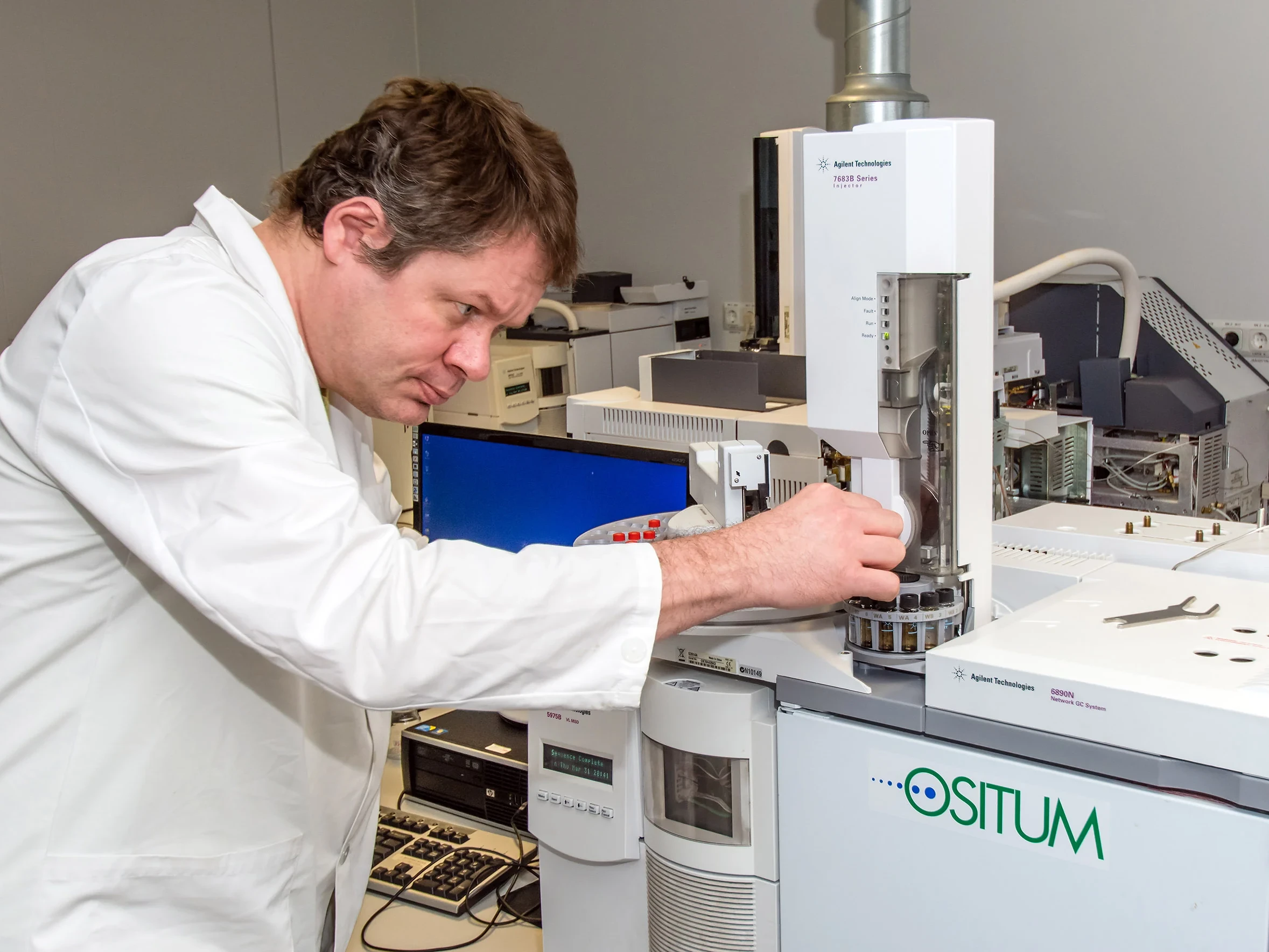
They can be useful when chemicals are used or when staff notice unusual odours. Where appropriate, TVOC measurements can inform more detailed laboratory analysis.
Carbon dioxide (CO₂)
Carbon dioxide measurements help assess whether ventilation meets the demands of occupancy. They can help investigate why a space feels stuffy or how ventilation performs under different conditions.
Temperature and relative humidity
Monitoring temperature and humidity provides a fuller picture of workplace conditions and helps interpret other measurements.
Tailor the assessment to the site
Every workplace is different. Choose measurements according to conditions at the site.
A practical example
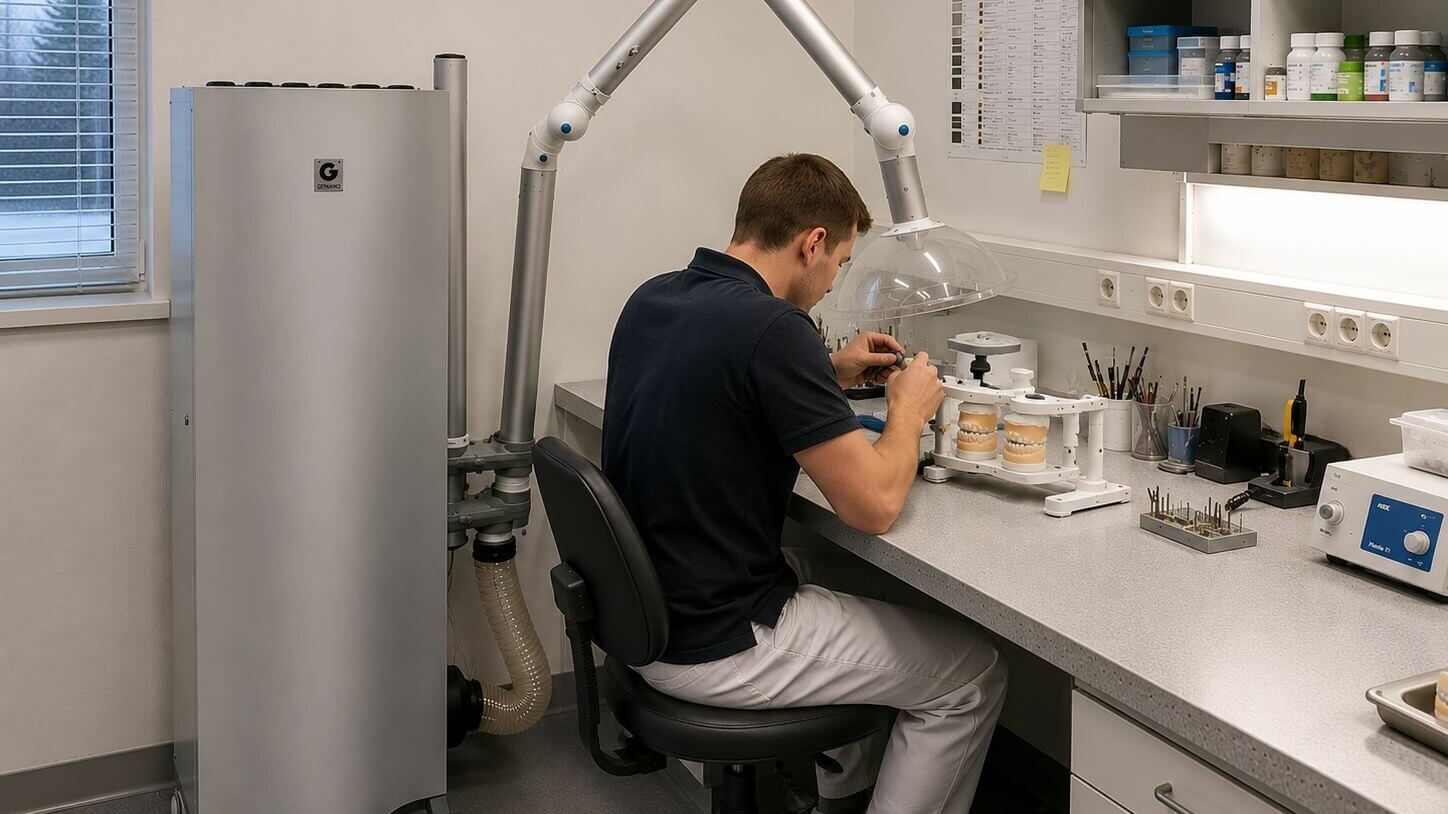
Indoor air measurements in a dental laboratory tracked both particle concentrations and TVOC levels. The aim was to understand how work processes affected air quality and gather evidence for any follow-up measures.
Measurements showed clear differences between workplaces. Inhalable fine particles were more prominent at one site, while TVOC concentrations stood out at the other. The example shows why measurements should reflect the risk factors at each site.
Summary
Indoor air measurements provide reliable evidence for decisions about the workplace. When measurements reflect the conditions at the site and are interpreted alongside work processes and staff observations, they provide a basis for improving the working environment over time.